The Hidden History of Lough Derg
My mammy went there on pilgrimage. Centuries earlier, European mapmakers marked it as St Patrick’s Purgatory.
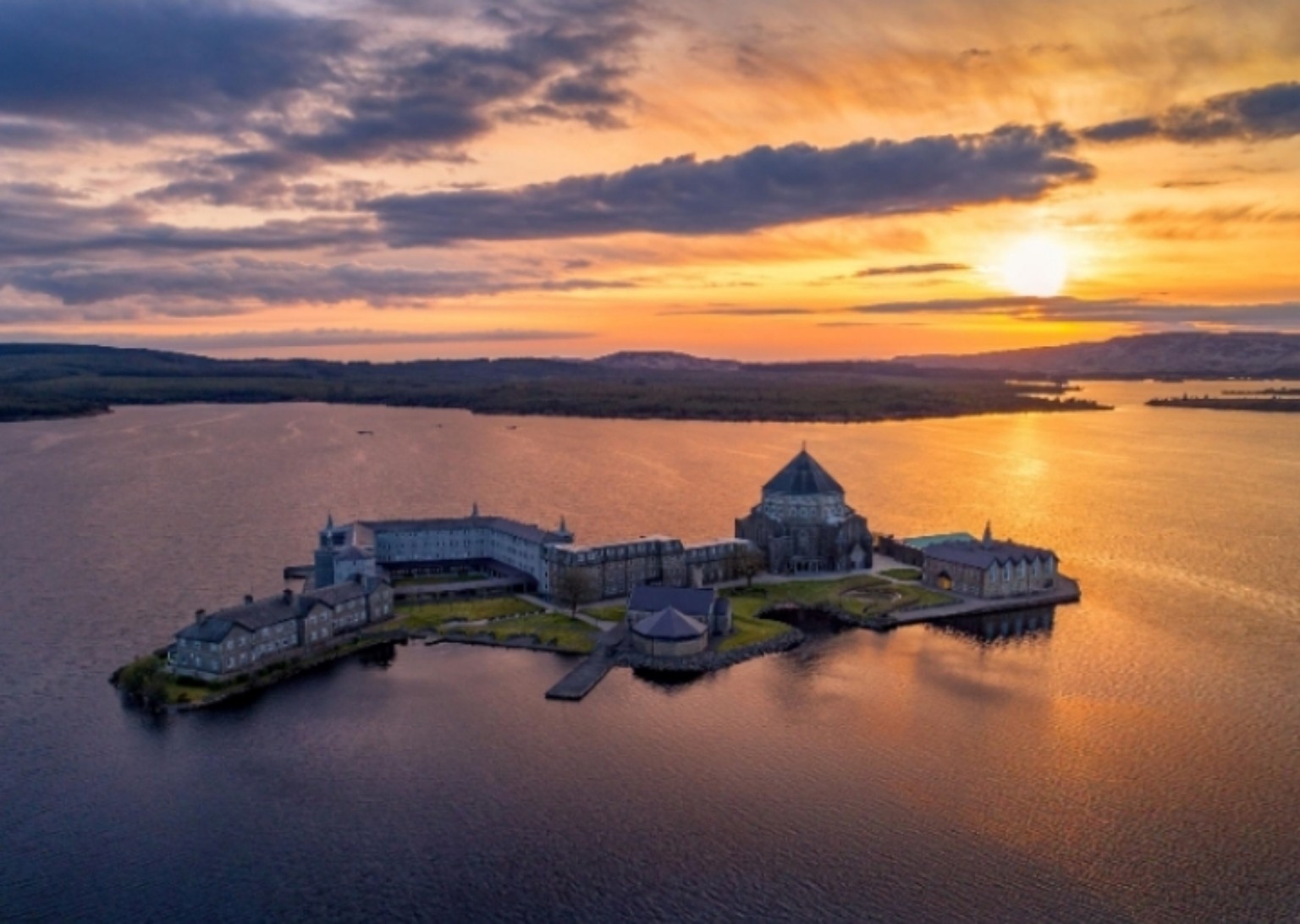
Growing up in Donegal, Lough Derg was simply somewhere people went. A mother, an uncle, a grandmother would take the ferry across to Station Island and spend a few days fasting, praying and doing the rounds. There were bare feet on rough stones, black tea and dry toast, repeated prayers and a night without sleep. Afterwards, people came home and said it had been worthwhile.
My mammy went a few times. She suffered from migraines, and I remember her telling me that the headaches she experienced there were among the worst of her life. I knew the pilgrimage had been difficult for her. I also understood that she felt there had been value in going.
Everyone seemed to know somebody who had been. “Have you been to Lough Derg?” was an ordinary question. It belonged to the religious and family life around us, somewhere between a pilgrimage, a tradition and a rite of passage.
We knew what people did there. What I do not remember being taught was how this particular place had become so important.
Years later, I was watching QI - short for Quite Interesting, the British comedy panel show where unusual questions lead into conversations about history, science and received wisdom. In an episode hosted by Sandi Toksvig, the discussion turned to purgatory and a cave on Station Island in Lough Derg.
The programme explained that St Patrick’s Purgatory had appeared on medieval maps.
I had heard that name all my life. What I had never properly considered was that people once took it literally. This was believed to be a place where a living person could enter the otherworld, endure its torments and return cleansed.
And it was only up the road from me.
Station Island lies in Lough Derg near Pettigo. Its buildings crowd a small patch of land, their towers and church rising above the water like a miniature fortified settlement. The main church was built during the 1920s and received the title of basilica in 1931, but the sanctuary’s history reaches back many centuries.
Nearby is the larger Saints’ Island, associated with an early monastic foundation traditionally attributed to St Davog, also known as Dabheoc. During the medieval pilgrimage, Augustinian canons there prepared visitors through prayer and penance before they crossed to Station Island. The central ordeal was a day and night inside a confined underground chamber called purgatory.
The story that made the place famous across Europe was recorded in the late twelfth century by a monk usually called Henry of Saltrey. His account described an Irish knight, Owein, who entered the cave, endured the torments of the otherworld and emerged purified.
According to the account, Christ had shown the cave to St Patrick, promising that a truly penitent person who remained there for a day and night could be cleansed. This was a medieval legend about Ireland’s patron saint, written centuries after his lifetime. Its influence was considerable. Translations and retellings circulated across Europe, bringing pilgrims to this remote Irish lake.
The maps show just how far its reputation travelled.
Martin Behaim’s globe of 1492 included St Patrick’s Purgatory. Donegal County Archives describes it as the only Irish location named on the globe - a striking measure of the sanctuary’s international reputation.
In the following century, Abraham Ortelius included it on his map of Ireland. Beside Lough Derg, an inscription identified Patrick’s purgatory and attributed its establishment there to God, through the saint’s prayers. It cited Gerald of Wales, whose medieval account helped transmit the place’s reputation.
The mapmakers were drawing on religious accounts and an established pilgrimage tradition. Recording the site alongside rivers, towns and territories gave that tradition geographical authority. A place associated with passage into purgatory could be located in the world.
“Official entrance” was how I first understood the claim. The maps alone do not establish a formal Church designation, but the historical fact is extraordinary enough: European cartographers marked a supposed threshold of the afterlife in Donegal.
For medieval pilgrims, reaching it could involve a journey across countries and seas. They travelled with accounts of those who had entered, suffered and returned. The ordeal offered the hope of undergoing during life what might otherwise await after death.
The cave has disappeared, and the pilgrimage has changed over the centuries. Station Island, named for its prayer “stations”, still draws people to barefoot rounds, restricted meals and a 24-hour vigil.
I think again of my mammy making that crossing. As an atheist, I find the relationship between suffering and spiritual relief difficult, especially when I remember her migraines. But I cannot presume to know everything she sought or found there. I wish I had asked her more.
Across Donegal, there must be countless families with memories like mine. We remember who went, what they endured and how they felt afterwards. The pilgrimage was familiar enough to need little explanation. Its medieval history was less familiar, although it had once made this small island famous across Europe.
I grew up knowing that my mammy had been to Lough Derg. It took a television programme to show me what European mapmakers had once placed there: a passage between this world and the next.